
The Complete Self-Tape Audition Guide for Actors in India (2026)
Updated: July 2026 | By Virendra Rathore, Founder — JoinFilms Academy, Mumbai
Short answer: A strong self-tape audition needs five things: a plain background, natural or soft lighting, clean audio, a steady eye-level camera angle, and a genuine, natural performance rather than a theatrical one. In India, over 60% of initial casting rounds for OTT, TV, and film now happen through self-tape — making this skill as important as acting talent itself. Most self-tapes are rejected for technical reasons before the performance is even properly seen.
Why the Self-Tape Matters More in India Than People Realize
The shift to self-tape auditions has changed the Indian entertainment industry more than most actors understand. Before 2020, casting for Bollywood, television, and advertisements happened almost entirely in person — which meant actors outside Mumbai were structurally excluded from most opportunities regardless of talent.
That has changed. Casting directors for OTT platforms, films, and TV serials now regularly review hundreds of self-tapes for a single role — and an actor in Jaipur, Lucknow, or Chennai competes on equal footing with an actor in Mumbai, provided the tape is technically clean and the performance is genuine.
This means self-tape skill is no longer optional. It is a core professional competency — as important to a working actor's career as the acting itself.
What Equipment You Actually Need
The good news: you do not need expensive equipment to make a self-tape that competes at a professional level.
Total realistic investment: Under Rs 2,500 for a complete self-tape setup that will serve your entire acting career. This is one of the smallest investments with the highest return in an acting career.
7 Steps to a Self-Tape That Gets Callbacks
1
Choose the Right Space
Any quiet room with a plain, uncluttered wall works. Avoid patterned wallpaper, visible furniture, or busy backgrounds — they distract from your face and read as unprofessional. A neutral wall in soft, medium tone (grey, beige, muted blue) works best on camera.
2
Set Up Natural Light First
Position yourself facing a window during daytime — this is the single most effective and free lighting solution. Avoid overhead lights that cast shadows under your eyes. If natural light isn't available, a simple ring light (available for under Rs 1,000 online) placed at eye level works well.
3
Frame Yourself Correctly
Camera at eye level — not below (unflattering angle) or above (looks like surveillance footage). Frame from mid-chest to slightly above your head. Leave a small amount of headroom, but don't leave excessive empty space above your head.
4
Get Clean Audio
Your phone's built-in microphone is usually good enough if you're in a quiet room. Turn off fans, close windows if there's outside noise, and silence your phone notifications completely before recording. Poor audio gets a self-tape rejected faster than average acting.
5
Use a Reader — Even If It's Just Your Phone
Have someone read the other character's lines off-camera, close to the lens, so your eyeline is natural. If no reader is available, record the other character's lines yourself and play them back quietly through a second device positioned near the camera.
6
Do Multiple Takes — But Make Each One a Genuine Choice
Most casting briefs ask for two takes. Don't simply repeat the same read louder or softer. Make each take a genuinely different interpretation — this shows range and gives the casting director options, rather than a single choice repeated twice.
7
Review Before Submitting
Watch your take back before sending. Check: Is the audio clear? Is the framing steady? Does the performance feel natural rather than performed? A five-minute review before submission catches problems that would otherwise cost you the role before anyone even sees your acting.
Watch: How to Record Your Audition Video and Self-Introduction
Virendra Rathore explains how to record a professional self-introduction and audition video — the exact format casting directors expect:
Common Self-Tape Mistakes Indian Actors Make
- Shooting in portrait/vertical mode — always shoot landscape/horizontal unless the brief specifically requests vertical for a mobile-first platform.
- Over-rehearsing the lines, under-rehearsing the listening — casting directors watch your reactions during the other character's lines as closely as your own delivery.
- Performing at theatrical scale — self-tapes are intimate. What reads as committed on stage reads as overacting on a close-up camera.
- Ignoring the specific brief — if the casting call asks for a particular tone, wardrobe note, or scene detail, follow it precisely. Casting directors notice when instructions are ignored.
- Submitting without reviewing — shaky framing, poor audio, or an accidentally cut-off take are avoidable and cost you the opportunity before your acting is even considered.
- Using a completely blank or busy background — both extremes are distracting. A simple, slightly textured plain wall works best.
Slating is the brief self-introduction at the start of your tape — your name, the city you're based in, and sometimes your height or the role you're auditioning for. Keep it under 10 seconds, natural and confident, not stiff or rushed.
File format: Most Indian casting platforms and production houses accept MP4 format. Keep file sizes reasonable — compress if needed without sacrificing visible quality. Name your file clearly: YourName_RoleName_Date is a standard, professional convention.
Submission: Follow the casting brief's exact submission instructions — via email, WhatsApp, or a specific casting platform link. Submitting through the wrong channel, even with a great tape, can mean it is never reviewed.
Watch: Top Audition Tips for Beginners — Crack Auditions with Confidence
A complete beginner's guide to approaching auditions with confidence — covering mindset, preparation, and self-tape essentials:
Getting the Performance Right — Not Just the Technical Side
A technically perfect self-tape with a weak performance still doesn't book work. The technical setup gets your tape seen — the performance is what gets you cast.
This is where most self-tape guides stop short. Technical setup is learnable in an afternoon. Genuine, natural, camera-ready performance — the ability to access real emotion rather than perform it, and to do this consistently on demand — takes actual training.
The SOSO (Switch On Switch Off) Acting Method, developed by Virendra Rathore at JoinFilms Academy, is specifically designed to help actors deliver natural, camera-ready performances — exactly what a self-tape requires. It works for complete beginners and experienced actors alike, and directly addresses the specific challenge of performing truthfully alone in a room, without a live audience or scene partner physically present.
Fraud warning: No legitimate casting platform or production house charges actors money to submit a self-tape or to be considered for a role. If any platform demands payment for "priority review" or "guaranteed callback," it is a scam. Self-tape submission through verified casting platforms is always free.
Build Your Self-Tape Skills With JoinFilms Academy
Frequently Asked Questions
❓ What equipment do I need for a self-tape audition in India?
A smartphone, a basic tripod (Rs 300-800), natural window light or a simple ring light (Rs 800-1,500), and a quiet room with a plain wall background. Total investment is typically under Rs 2,500 for a complete, reusable setup.
❓ How long should a self-tape audition be?
Follow the specific casting brief — most self-tapes for Indian film, TV, and OTT roles run 1-3 minutes including slating. Do not pad the tape with unnecessary content; casting directors review hundreds of tapes and value tapes that respect their time.
❓ What is slating in a self-tape audition?
Slating is the brief introduction at the start of your tape — stating your name, city, and sometimes height or the role name. It should be natural and confident, under 10 seconds, delivered directly to camera before your scene begins.
❓ Why do self-tapes get rejected in India?
Most self-tapes are rejected for technical reasons rather than acting quality — poor audio, shaky or incorrect framing, bad lighting, or not following the casting brief's specific instructions. Fixing these technical issues before submission significantly improves your callback rate.
❓ Can I use my phone camera for professional self-tape auditions?
Yes. Any smartphone from the past 3-4 years shoots at quality that exceeds what most Indian casting platforms require. A dedicated camera is not necessary — proper lighting, steady framing, and clean audio matter far more than camera quality.
❓ How do I make my self-tape performance look natural rather than staged?
Camera acting requires a different scale of performance than theatre — contained, truthful, and specific rather than projected. The SOSO Acting Method at JoinFilms Academy is specifically designed to help actors access genuine emotion for camera, which is what makes self-tape performances read as natural rather than performed.
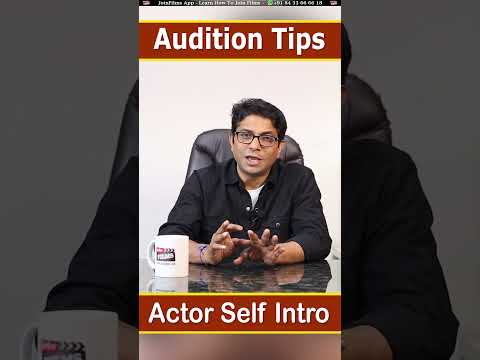
About the Author — Virendra Rathore
Virendra Rathore is the Founder and Chief Mentor of JoinFilms Academy, Mumbai. A Dadasaheb Phalke Film Foundation Award winner (Best Acting Mentor), IMDB-credited filmmaker, TEDx speaker, and bestselling author of the "Switch On Switch Off Acting Method," he brings over 25 years of active experience across acting, direction, and film education. Creator of JoinFilms — one of India's largest independent filmmaking communities, with over 2.9 million subscribers on YouTube.
IMDb profile.
Career Guidance: Get Free Bollywood Career Guidance →
Related: How to Become an Actor in India · How to Get Into Bollywood Without Connections · Audition Reject Hone Ke Baad Kya Karein · Best Online Acting School in India · JoinFilms on YouTube
 Launch your Graphy