Updated: November 2026 | By Virendra Rathore, Founder — JoinFilms Academy
Short answer: Navras in acting means training the nine core emotional states described in Indian performance theory — Shringar (love), Hasya (laughter), Karuna (sorrow), Raudra (anger), Veera (courage), Bhayanaka (fear), Bibhatsa (disgust), Adbhuta (wonder) and Shanta (peace). The first eight come from Bharata Muni's Natya Shastra; Shanta was added by later scholars. For a modern camera actor, navras practice is not about making nine "faces". It is about finding the inner feeling (sthayi bhava) behind each rasa and letting it show through the eyes, breath and stillness, at a size the lens can trust.
What Is Navras in Acting?
"Nav" means nine and "ras" (rasa) roughly means flavour or essence. So navras in acting is the study of nine emotional flavours an actor can create so that the audience tastes the same feeling. That last part matters. In the Indian tradition, rasa is not what the actor feels privately — it is what the audience experiences. Your job is to build the conditions for that experience.
Most aspiring actors in India first hear about navras in a theatre workshop, a nukkad natak group, or a classical dance class. Then they arrive at a film audition and get told, "Too much. Bring it down." The problem is not the navras system. The problem is that the rasas were learnt as external expressions instead of internal states. This guide fixes that gap and shows you how to make navras in acting work for self-tapes, auditions and OTT-style close-ups.
Where the 9 Rasas Come From: Natya Shastra in Brief
The Natya Shastra is an ancient Sanskrit treatise on drama, dance and music attributed to Bharata Muni. Estimates of its date vary widely; Wikipedia gives a range of roughly 500 BCE to 500 CE. Its section on rasa describes eight primary rasas. The ninth, Shanta (peace), was added by later authors, and its acceptance was debated for centuries before it became part of the standard "navarasa" list.
The text also gives a famous formula, often called the rasa sutra: rasa is produced from the combination of vibhava (the cause or trigger), anubhava (the visible response) and vyabhicari bhava (passing, transitory feelings). Underneath each rasa sits a sthayi bhava — the stable, lasting emotion. For navras in acting, this is the most useful idea in the whole system:
- Vibhava = the given circumstances. What happened to your character just before the scene?
- Anubhava = what the body does. Breath, eyes, posture, voice.
- Vyabhicari bhava = the small shifts — doubt, a flash of shame, a sudden hope — that keep an emotion alive and human.
Modern acting teachers say the same thing in different words: play the situation, not the emotion. That principle is the foundation of navras in acting. Two thousand years apart, the advice is identical.
The 9 Rasas on Camera — Comparison Table
The table below is our working sheet for screen actors. The rasa names and sthayi bhavas follow the classical list; the camera columns are practical notes from training actors for close-ups and self-tapes.
Notice the pattern in the last column. Almost every mistake comes from showing the result instead of living the cause. That is the core lesson of navras in acting for screen.
Video 1: Shanta Ras — Playing Peace on Camera
Shanta is the hardest rasa for many beginners because there is nothing to "do". In this short from the JoinFilms channel, watch how peace is shown through stillness and breath rather than a fixed smile.
After watching, try it yourself: sit in front of your phone camera for 60 seconds without performing anything. If you feel the urge to "show" calm, that urge is exactly what Shanta asks you to drop.
How to Practise Navras in Acting: 7 Lessons
These lessons come from the way we coach navras in acting for camera. Follow them in order.
- Start with the sthayi bhava, not the face. Before a Karuna take, recall the loss your character has suffered. The face will follow the thought. If you start from the face, you get a mask.
- Build the vibhava in one sentence. Write a single line of given circumstance for each rasa: "My younger brother just cleared his exam" for Adbhuta, or "Someone is in the next room" for Bhayanaka.
- Let the eyes lead. In a close-up, the eyes carry most of the story. Practise each rasa with your mouth relaxed and still, and see how much the eyes alone can say.
- Use breath as the switch. Fear holds the breath, anger pushes it, peace lengthens it, wonder catches it. Change the breath and the rasa changes.
- Add one vyabhicari bhava. Real anger contains hurt. Real courage contains fear. Add one passing feeling to every rasa so it does not look like a demo.
- Scale for the frame. Perform the same rasa at three sizes — stage, mid-shot, close-up — and record all three. You will quickly see which size the lens believes.
- Move between rasas, not just into them. Scenes rarely stay in one emotion. Practise transitions such as Hasya to Karuna in one line; this is where navras in acting shows real control to casting directors.
Video 2: Veera Ras — Courage Without Shouting
Veera is often confused with Raudra. Courage is not anger; it is resolve. This JoinFilms short shows the brave rasa — notice how much of it lives in a steady eyeline.
A quick test: say "Main yahin rukunga" twice — once angry, once brave. If both versions sound the same, your Veera needs more grounding and less force.
Navras in Acting: Camera vs Stage
The nine rasas do not change between theatre and film, so navras in acting is the same system on both. What changes is the size of the anubhava — the visible response. On stage, the last row of the audience needs to read your Bhayanaka from far away, so gestures and voice grow. On camera, the lens sits a few feet from your face and magnifies everything.
That is why actors who are excellent on stage sometimes look like they are overacting in their first self-tape. Their emotional truth is fine; the scale is wrong. Keep the inner feeling at full strength, and shrink the outer expression. A useful rule from our camera classes: feel 100%, show what the frame needs.
Theatre training still gives you a big advantage. Nukkad natak and stage work build voice, presence and stamina. When you bring that discipline to a close-up and trim the size, navras in acting becomes one of the strongest tools you have for showing range in a short audition.
Honest note: Navras in acting will not make you a great actor on its own, and no course or method can promise you work. The nine rasas are a vocabulary. Range on screen also needs listening, script understanding, dialogue delivery and lots of recorded practice with feedback. Use navras as a daily warm-up and diagnostic, not as a shortcut.
A 9-Day Rasa Practice Exercise
This practical navras in acting exercise needs only a phone, a tripod or a stack of books, and 15 minutes a day.
- Pick one neutral line. For example: "Mujhe kal subah wapas jaana hai." Use the same line for all nine days.
- One rasa per day. Day 1 Shringar, Day 2 Hasya, Day 3 Karuna, Day 4 Raudra, Day 5 Veera, Day 6 Bhayanaka, Day 7 Bibhatsa, Day 8 Adbhuta, Day 9 Shanta.
- Write the vibhava. One sentence: who are you saying it to, and what just happened?
- Record three takes in a mid-close shot: the first at "stage size", the second at half that, the third with almost no visible effort.
- Watch on mute. Without sound, can you guess the rasa? If not, the inner thought was not clear enough.
- Note one transition. End each take by sliding into the next day's rasa for one second.
On Day 10, watch all nine third takes in a row. This record of your navras in acting becomes a small range reel you can study — and a good base for a showreel scene later.
Several rasas have their own detailed guides on our blog. Use them alongside your navras in acting practice:
Courses to Train Navras in Acting With Feedback
Self-practice of navras in acting builds awareness, but an experienced mentor can spot what your own eyes miss. If you want structured training with feedback, these JoinFilms options fit different situations:
Frequently Asked Questions
❓ What are the 9 rasas in acting?
The nine rasas are Shringar (love), Hasya (laughter), Karuna (sorrow), Raudra (anger), Veera (courage), Bhayanaka (fear), Bibhatsa (disgust), Adbhuta (wonder) and Shanta (peace). The first eight come from the Natya Shastra; Shanta was added by later scholars.
❓ Is navras useful for film acting or only for theatre and dance?
Yes, navras in acting is useful for both. The emotional states are the same; only the scale changes. For film, keep the inner feeling strong and make the outer expression smaller so the camera reads it as real.
❓ Who wrote about rasas first?
The rasa theory is first described in the Natya Shastra, an ancient Sanskrit text on performance attributed to Bharata Muni. Scholars' estimates of its date vary widely, roughly between 500 BCE and 500 CE.
❓ How long should I practise navras every day?
Around 15 minutes a day is enough to start. Work on one rasa per day, record it on your phone, and review it on mute. Consistency matters more than long sessions.
❓ Which rasa is the hardest to act on camera?
Many beginners find Shanta (peace) and Bibhatsa (disgust) the hardest. Shanta has nothing to "show", and Bibhatsa easily turns comic if it is too big. Both need fine control of the face and breath.
❓ Can navras practice help me in auditions?
Yes. Casting directors often look for range and control. Being able to shift cleanly between emotions in one short scene is a strong signal. Navras in acting builds that control, but it works best together with script reading and self-tape practice.
❓ What is the difference between rasa and bhava?
Bhava is the emotional state the performer creates; rasa is the flavour the audience experiences as a result. Each rasa has a lasting core emotion called the sthayi bhava, such as Krodha (anger) for Raudra.
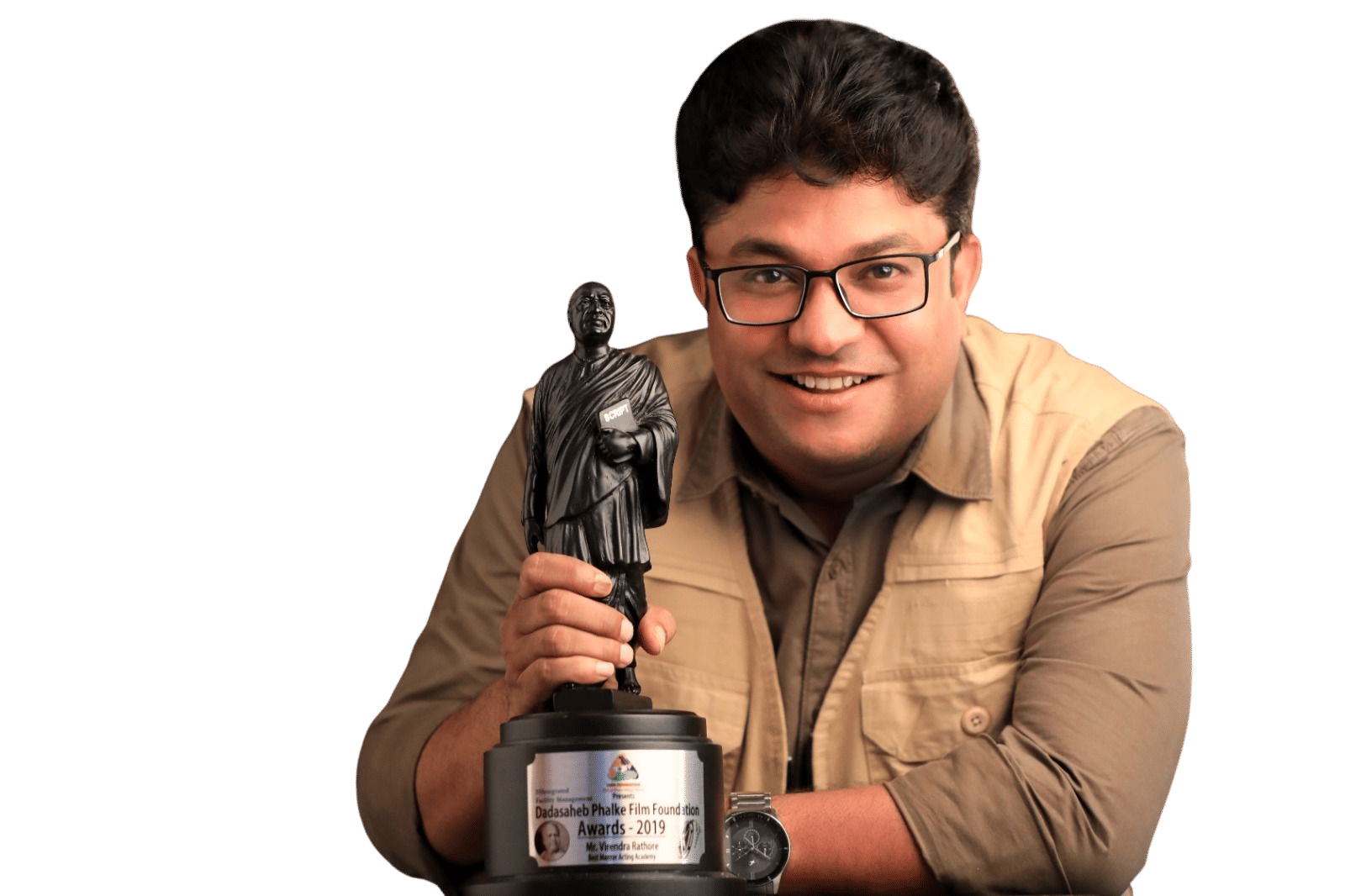
About the Author — Virendra Rathore
Virendra Rathore is the Founder and Chief Mentor of JoinFilms Academy. A Dadasaheb Phalke Film Foundation Award winner (Best Acting Mentor), IMDb-credited filmmaker, TEDx speaker, and bestselling author of the "Switch On Switch Off Acting Method," he brings over 25 years of active experience across acting, direction, and film education. Creator of JoinFilms — one of India's largest acting education communities, with over 2.9 million YouTube subscribers.
IMDb profile.
Career Guidance: Get Free Bollywood Career Guidance →
Sources: Rasa (aesthetics) — Wikipedia; Natya Shastra — Wikipedia. Related: Voice Modulation and Diction for Actors · Self-Tape Audition Guide for India · Monologue Practice Tips

 Launch your Graphy