Updated: November 2026 | By Virendra Rathore, Founder — JoinFilms Academy
Short answer: Camera shots for actors decide how big your performance should be. In a wide shot the camera sees your whole body, so posture, walk and blocking carry the scene. In a mid shot your hands and upper body tell the story. In a close-up the lens sees your eyes and tiny facial changes, so you shrink the expression, slow your breath and let the thought show. Good screen actors keep the same emotional truth in every frame and only change the size. Learn the shot sizes, ask the AD or DOP "what's the frame?", and adjust before the take.
Why Camera Shots for Actors Matter More Than You Think
Most beginners in India prepare dialogues, emotions and looks, but nobody explains camera shots for actors. Then they walk onto a TV serial set, an OTT web series shoot or even a simple self-tape, and the director says, "Bas itna hi, chhota karo." The reason is simple. The camera is not one audience sitting at a fixed distance like in theatre. It moves closer and farther, and every time it moves, the right size of your performance changes.
That is why understanding camera shots for actors is a practical skill, not a technical hobby. A director on set needs you to hit the same mark and repeat the same action across five set-ups. If you know what the lens is seeing, you stop guessing and start controlling your performance.
In our classes at JoinFilms Academy, we see the same pattern again and again: students who learn shot sizes early lose their camera fear faster, because the camera stops being a mystery. It becomes a tool they can read. That is the real goal of learning camera shots for actors.
The Main Shot Sizes Every Screen Actor Should Know
Different crews use slightly different names, but these are the shot sizes you will hear most on Indian sets. Learn them in English, because ADs and DOPs call them in English even on Hindi shoots. Think of these camera shots for actors as a vocabulary you must speak on day one.
Extreme wide shot and wide shot (long shot)
The camera shows the location and your full body. Your walk, your posture and where you stand in the space tell the audience who you are. Facial detail almost disappears, so energy has to live in the body. Among all camera shots for actors, this is the one where beginners most often "switch off".
Full shot and medium long shot
Head to feet, or head to knees. You will see these in group scenes, dance moments and entries. Blocking and timing matter a lot here.
Mid shot (medium shot)
Roughly waist up. This is the "conversation" frame of many TV serials. Hand gestures, props and shoulder movement are clearly visible, so keep them purposeful.
Medium close-up and close-up
According to the standard definitions summarised on Wikipedia's close-up article, a medium close-up usually covers the head and shoulders, while in a close-up a feature such as the head takes up the whole frame. This is where emotional scenes, reaction shots and audition self-tapes live, and it is the frame most discussions of camera shots for actors focus on.
Extreme close-up
Only a detail is visible, such as the eyes or lips. Here even a blink becomes a story beat. You do almost nothing physically and let the thought do the work.
You will also hear terms like over-the-shoulder (OTS), two-shot, POV and insert. An OTS shows your face over the other actor's shoulder, and a two-shot keeps both of you in frame. Ask, never assume. These extra camera shots for actors appear daily on OTT and TV sets.
Camera Shots for Actors: Comparison Table
This is the table we use to explain the frame in class. It is not a rule book, but a starting point you can adjust with the director's notes. Save it and revise these camera shots for actors before every shoot.
Notice the pattern: the emotion does not change from row to row. Only the size and the body part that carries it change. That is the heart of camera shots for actors.
Video: Top 10 Camera Shots Explained by Virendra Rathore
In this JoinFilms video, Virendra Rathore walks through the top 10 types of camera shots used in Bollywood films and TV serials. Watch it once for the names, then watch it again and imagine how you would act in each frame. It is one of the clearest introductions to camera shots for actors in Hindi.
How to Act in a Close-Up Without Overacting
The close-up is the shot that makes or breaks most beginners. On a big screen or even a phone, your face may be the largest thing the viewer sees. Every extra eyebrow lift looks like a shout. Of all camera shots for actors, the close-up demands the most control. If you have read our guide on how to avoid overacting, you already know the cure: reduce, don't remove.
- Think, don't show. Run the character's thought silently before and during the line. The camera picks up thinking eyes.
- Keep your eyeline steady. Find the exact point (usually the other actor's eye near the lens) and do not let your eyes wander unless the scene needs it.
- Control the blink. Random blinking in a close-up reads as nervousness. A deliberate blink can be a powerful beat.
- Breathe low and slow. Shallow, fast breathing shows in the shoulders and neck.
- Hold the head. Small head movements can take you out of focus or out of frame on a tight lens.
Our detailed lessons on facial expressions for acting go deeper into micro-expressions if you want to practise this part.
Coverage, Continuity and Matching Your Action
On most sets, a scene is not shot once. The crew usually covers it from several frames: a wide master, mid shots, then close-ups on each actor. The editor later cuts between them. This means you will repeat the same scene many times, and your performance must match across all those takes. Coverage is where camera shots for actors and continuity meet.
If you pick up the cup on the word "kal" in the wide shot, pick it up on "kal" in the close-up too. If your dupatta was on the left shoulder, keep it there. Continuity mistakes waste time, and on a tight TV schedule that is the fastest way to lose a director's trust. Our post on film set etiquette for actors covers more of these on-set habits.
Video: How a Real Location Shoot Is Done
This JoinFilms video takes you to a real location shoot of a Bollywood-style shootout scene. The chapters cover the real location, expression, direction, work profile, trial rehearsal, practical learning and a close shot, so you can see how the frame changes as the crew moves in. Watch how the camera shots for actors change from the trial rehearsal to the close shot.
7 Lessons on Camera Shots for Actors From the Set
- Always ask "What's the frame?" Before each take, ask the AD or the camera team politely. It is a professional question, not a beginner question.
- Same truth, different size. The emotion stays honest; only the volume of expression changes from wide to close-up.
- Know your mark. A tape mark on the floor keeps you in focus. Practise reaching it without looking down.
- Respect the edge of the frame. In a mid shot, a hand that keeps entering and leaving the frame distracts the viewer.
- Save your peak for the close-up. Give the scene honestly in the wide shot, but keep enough fuel for the tight shots.
- Repeat exactly. Matching action across coverage is part of your craft, not the editor's problem.
- Self-tapes are mostly close-ups. For auditions, a medium close-up is a common framing, so train for it. Our self-tape audition guide explains setup and framing in detail.
Honest note: Knowing camera shots for actors will not get you cast by itself. It makes you easier to work with and helps your talent reach the screen. Casting still depends on the role, your look for that character, preparation and many factors outside your control. No course or blog can guarantee work, and anyone who promises that is not being honest with you.
Practical Exercise: One Scene, Four Frames
You only need a phone, a tripod (or a stack of books) and a short two-line dialogue. Try this for a week. It is the simplest way to practise camera shots for actors at home.
- Pick one emotional line, for example: "Maine tumhara intezaar kiya tha… poore do saal."
- Record a wide shot with your full body in frame. Walk in, stop on a mark, say the line.
- Record a mid shot from the waist up. Use one prop, like a phone or a cup, with a single clear gesture.
- Record a close-up with your face filling most of the frame. Same emotion, smaller face. Let the eyes carry it.
- Record an extreme close-up on your eyes only. Say the line in your head first, then out loud, almost still.
- Watch all four back to back. Ask: Did the emotion stay the same? Did I overdo it in the close-up? Did I disappear in the wide?
Repeat with a new line every day. By day seven, most students notice that their close-up work becomes calmer. If you feel nervous in front of the lens, pair this with the practice ideas in theatre vs film acting, which explains why stage habits need resizing for camera.
Courses to Practise Camera Acting
Reading helps, but the frame is learned in front of a real camera with feedback. Camera shots for actors are best learned with a trainer watching the monitor. These JoinFilms programmes focus on practical camera work:
FAQs on Camera Shots for Actors
❓ What are the most important camera shots for actors to learn first?
Start with four: wide shot, mid shot, close-up and extreme close-up. Once you can adjust your performance across these, terms like OTS, two-shot and medium close-up become easy to understand on set.
❓ How should I act differently in a close-up?
Keep the same emotion but reduce the size. Let your eyes and thoughts carry the scene, control unnecessary blinking, breathe slowly and avoid big head movements that can take you out of focus.
❓ Is it okay to ask the director what the shot size is?
Yes. Asking the AD or camera team "what's the frame?" is a normal professional question. Ask politely and at the right moment, usually before the take, not while the crew is lighting.
❓ What shot size is used for self-tape auditions?
A medium close-up (head and shoulders) is a common framing for self-tapes, but always follow the casting brief. Some briefs also ask for a full-length shot for introductions.
❓ Why do I have to repeat the same scene so many times on set?
The crew shoots coverage, meaning the same scene from different frames such as a wide master, mid shots and close-ups. The editor cuts between them, so your actions and timing must match in every take.
❓ Can theatre actors adjust to camera shots easily?
Many theatre actors adjust well because they already have strong voice and body skills. The main shift is reducing the size of expression for close-ups and learning marks, eyelines and continuity.
❓ How can I practise camera shots at home?
Use a phone on a tripod and record the same short dialogue in a wide shot, mid shot, close-up and extreme close-up. Watch them back to back and check whether the emotion stayed the same while the size changed.
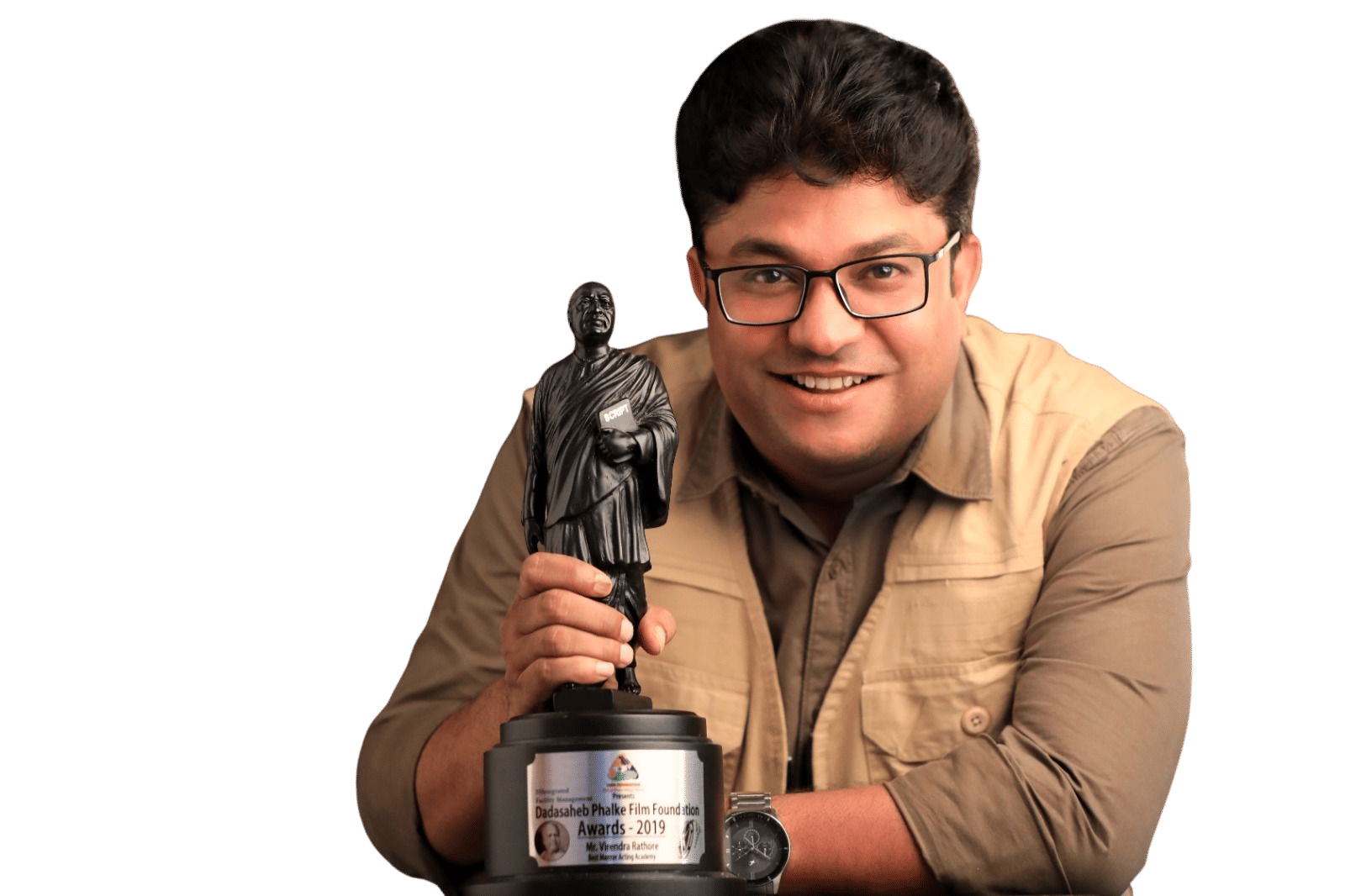
About the Author — Virendra Rathore
Virendra Rathore is the Founder and Chief Mentor of JoinFilms Academy. A Dadasaheb Phalke Film Foundation Award winner (Best Acting Mentor), IMDb-credited filmmaker, TEDx speaker, and bestselling author of the "Switch On Switch Off Acting Method," he brings over 25 years of active experience across acting, direction, and film education. Creator of JoinFilms — one of India's largest acting education communities, with over 2.9 million YouTube subscribers.
IMDb profile.
Career Guidance: Get Free Bollywood Career Guidance →
Sources: Shot-size definitions from Wikipedia — Close-up; video details from the official JoinFilms YouTube channel. Related reads: How to Avoid Overacting · Facial Expressions for Acting · Theatre vs Film Acting · Self-Tape Audition Guide · Film Set Etiquette for Actors

 Launch your Graphy